


Mathieu Lehanneur: The Secret Lives of Objects and the Power of Design
Designer Mathieu Lehanneur explores emotional design, object energy, and the invisible forces that shape how we feel and connect with the objects around us.
Mathieu Lehanneur designs objects that feel alive. His work blurs the line between art, science, emotion, and human instinct - inviting us to question why objects attract us, move us, and sometimes even speak to us. In this conversation, he reveals the philosophies, memories, and energies behind his most extraordinary creations.
In this rare and intimate episode, internationally acclaimed designer Mathieu Lehanneur goes far beyond form and function. He shares why he sees objects as “stem cells”- entities full of potential, capable of carrying energy, emotion, memory, and even pieces of the people who live with them. He explains why great design isn’t about controlling materials, but about creating the right magnetic field between a person and an object.
Mathieu also opens up about his childhood as the youngest of seven, his path from fine art to design, and why he believes instinct - not perfection - is the most powerful creative tool. From the philosophy behind touch and attraction, to the emotional logic of objects, to designing the Olympic cauldron seen by billions, this conversation offers a profound understanding of what design truly means today.
Key Points
Why Mathieu abandoned fine arts for design
The difference between art’s vertical approach and design’s horizontal Trojan Horse strategy
Why objects carry energy and “potential souls”
The two-step design method: combine too much, then subtract until nothing else can be removed
What children can teach us about instinctive interaction with objects
Why tactile attraction is the first sign of successful design
How being the youngest in a large family shaped his sensitivity as a creator
The emotional and psychological layers behind designing for survivalism
Designing the 2024 Paris Olympic cauldron and the unseen decisions behind it
Why he doesn’t believe in legacy, yet opens “tiny doors” for future designers
How designers can sense cultural micro-signals before they become movements
Why objects must reveal themselves slowly - like getting to know a person
Standout Quote
“Objects are stem cells. They carry a potential soul - and it’s my job to plant the seed.”
- Mathieu Lehanneur
Timestamps
00:00 — Opening reflections and creative origins
01:00 — Becoming a designer: curiosity vs. necessity
03:00 — Why art school wasn’t enough
04:20 — The two-step process: adding, then subtracting
06:00 — Is Mathieu an artist, designer, or poet?
07:15 — Do objects have souls?
09:00 — Designing emotional energy
11:00 — Why touch is the first indicator of good design
13:00 — Childhood, family dynamics, and sensitivity
15:00 — How objects reveal themselves like people
17:30 — Creativity, morning rituals, and mental pacing
19:00 — Thoughts on legacy
22:00 — The “tiny doors” he opens for future designers
24:30 — Designing medicine and the emotional life of pills
26:00 — Survivalism and design in times of uncertainty
28:00 — Cultural micro-signals
30:00 — Family, expectations, and emotional honesty
35:00 — The book, film, and guest recommendations
41:00 — Closing conversation


Cultural Stack
Each week on the MINDED podcast, creative leaders share the books, films, and music that inspire them.


Stay in the Conversation
Subscribe to the MINDED Podcast Newsletter
Unlock exclusive insights, early-access episodes, and the ideas shaping the future of art, design & culture—delivered straight to your inbox every week.
FAQ
What is Mathieu Lehanneur’s design philosophy?
Mathieu Lehanneur’s philosophy merges science, emotion, and instinct to create objects that feel alive. He views objects as “stem cells” - entities filled with potential, capable of holding emotional energy and forming relationships with people. His process begins with combining ideas, materials, and concepts, then removing elements until only the essential emotional core remains. Lehanneur believes great design creates a subtle magnetic field between the object and the human body.
For more on contemporary design concepts, see our episode with Antoine Picon.
Why does Mathieu Lehanneur believe objects carry energy?
Lehanneur suggests that objects are not passive items but potential carriers of energy, memory, and emotional resonance. When people interact with an object - especially through touch - they exchange a kind of invisible magnetism. This belief shapes his design process: he begins by imagining the “energy field” an object should create, then builds the physical form around that intention. His view bridges psychology, instinct, and material intelligence.
For a related conversation on sensory experience, listen to Yinka Ilori on color and memory.
How does Mathieu Lehanneur approach form and simplicity in design?
Lehanneur uses a two-stage process: first, he freely adds multiple ideas, references, and emotional cues - creating an intentionally “noisy” starting point. Then he moves into subtraction, removing one element at a time. He stops only when removing another detail would weaken the object’s emotional clarity. It’s a sculptural approach grounded in instinct, not minimalism for its own sake. This technique creates objects that reveal themselves slowly, like getting to know a person.
For contrast, explore subtractive refinement in our episode with Jamie Bush.
How did Mathieu Lehanneur design the Paris 2024 Olympic Cauldron?
The Paris Olympic Cauldron required unifying symbolism, emotion, engineering, and global visibility. Lehanneur focused on creating an object that embodied national identity while also feeling deeply human - an object capable of transmitting emotion to billions of viewers. The result reflects his belief that design must operate on both visible and invisible levels. The project also illustrates how designers make hundreds of unseen decisions long before a final object emerges.
For insights on architecture and national identity, listen to Antoine Picon.


Transcript
Yuri:
My friend, it has been some time. So good to see you. So much has happened since the last time we were together. I’m excited to spend some time with you today. Let’s begin. I have a set of questions for you, and we can start there. Do you believe you became a designer out of curiosity or out of necessity?
Mathieu:
Probably both. When I left school, I wanted to become an artist. I studied at the Beaux Arts in France and stayed for six months. Very quickly, I realized that I didn’t want to be alone in a workshop all day, painting or sculpting. I wanted to be in the middle of something, interacting with people from different fields like scientists, historians, or philosophers.
So I pushed the door of a design school. Honestly, I didn’t know what a designer was supposed to be. It was an industrial design program, and I wasn’t ready to design toasters or machines. But I felt that design could combine creativity and art with something that interacts closely with people and society.
Yuri:
At that age, did you worry that you didn’t have everything figured out? These days, young adults are pressured to know exactly what they want to do.
Mathieu:
It was thirty years ago. The design world was different. There was no star system in design, no pressure to become a celebrity. It was just a profession. My parents were supportive and told me, “Do whatever you want, but do it seriously.” If I wanted to be an artist, fine. A designer, fine. A musician, fine. But whatever I chose, they wanted me to commit fully.
That gave me freedom without anxiety.
Yuri:
Design often involves elimination, removing layers until only the essential remains. Do you ever worry that you’re removing too much?
Mathieu:
The process happens in two steps. First, you combine things that aren’t supposed to be together. It’s like sculpting with clay. You add elements because you want to express something, create a mood, or make people feel something. In this stage, there are too many ideas and too much noise.
Then comes subtraction. You remove what isn’t necessary. You merge things that belong together. You keep the intensity of the core. You stop removing when taking away even one more element would cause a loss. It’s similar to painting. When do you stop? You stop when removing one brushstroke would make the piece weaker.
For a long time, removing makes the work stronger and clearer. But when the next subtraction makes the piece lose energy, you stop.
Yuri:
There’s a sense of poetry and science in your work. Is it fair to say you are an artist disguised as a designer or a scientist disguised as a poet?
Mathieu:
Probably both. Design can have the same impact as art, but it arrives differently in people’s lives. Art often stands vertically, saying, “Admire me.” Design approaches horizontally, like a Trojan horse. It enters people’s homes quietly, then reveals itself. I like that strategy. It’s subtle but powerful.
Yuri:
Do you believe objects have souls?
Mathieu:
I believe objects are like stem cells. They have potential. Their “soul” is not fully formed, but the possibility is there. My job is to plant a seed of soul. I put a part of myself in the object, but the owner also puts part of themselves into it. It becomes a dialogue, an exchange of energy.
For me, design is all about energy. Call it magnetism, attraction, or emotional resonance. I begin a project by thinking about the energy I want to create between a person and an object. Attraction, surprise, calm, wonder — whatever it is, the piece must create that connection.
Yuri:
What does it feel like when you create an object that truly communicates with you?
Mathieu:
I learned a lot from my children when they were young. I once placed random objects on a low table, a toy, a remote control, a tool, and observed which one they touched first. They rarely chose the toys because toys are too obvious. There’s no mystery. They chose the object that had ambiguity.
When I design something, if people fold their arms and say, “Nice, elegant, beautiful,” it’s a failure for me. If their first instinct is to touch it, then I’ve succeeded. Touch means desire. Desire means connection.
Yuri:
Do any of your kids want to follow in your footsteps?
Mathieu:
I tried, I swear. I told them one of them must become a designer. They didn’t care. My son works in the film industry, and my daughter wants to become a lawyer. That’s okay. I think my education gave them autonomy. I’d rather they live their own lives than follow mine blindly.
Yuri:
Many designers like to control materials, but your work has a sense of wonder. When control meets wonder, what wins?
Mathieu:
The object must attract you first, like meeting someone at a bar. Their appearance gets your attention for a few seconds, but the question is: Do you want to know more?
A good object must have chapters. The first chapter is attraction. The second is discovery over days and weeks. The last is a long life, the object must reveal layers over years, just like discovering a person again and again. This is the challenge: to design something people want to live with.
Yuri:
Before all the meetings and projects, who are you in the morning, in your first thoughts?
Mathieu:
My day never starts in the morning. My days and nights are one long thread. I always have ten or fifteen questions in my mind. I never design by drawing first. I design by thinking. The morning is simply a continuation of the night’s thinking.
Yuri:
Do you think about legacy?
Mathieu:
No. It feels pretentious. A year after my death, most people will forget me. Maybe galleries will make money with my work because I’ll be gone. But legacy in the sense of “helping the future” — no.
What matters to me is opening tiny doors in people’s minds today. When students say, “I became a designer because of you,” that matters. When someone says, “You helped me see design differently,” that is enough.
Yuri:
Are there doors you still want to open?
Mathieu:
One example is my diploma project from 2001. It explored designing medicine, the object itself, to improve the relationship between the patient and the treatment. The idea was to make patients allies in their healing, not passive consumers of pills.
The project hasn’t been industrialized for financial and marketing reasons, but I believe one day it will. That’s a door I opened early that may fully open long after I’m gone.
Yuri:
Design is often about improving people’s lives. Do you feel that responsibility?
Mathieu:
Who am I to improve someone’s life? That feels arrogant. I can barely improve the life of my wife and children. What I can do is feel what deserves attention.
Recently, for Maison & Objet, I focused on survivalism. After the pandemic, many people asked, “What if something collapses? Where will I go? How will I live?” These instincts already exist in society. Designers don’t invent them. We translate them.
Just like in the 1970s, when designers sensed people didn’t want to live like their bourgeois parents. They created low, lounge furniture because people were already sitting on the floor. Designers gave form to an existing feeling.
Yuri:
Let’s talk about your childhood. What was it like growing up? Are you more like your mother or your father?
Mathieu:
I am the youngest of seven. That means I was born into a ready made society. In a big family, nobody has time to focus on you. So you must find a balance. You are unique, but the group cannot center around you. I spent my childhood observing people, their interactions, tensions, jealousies, and attractions. I didn’t build things or draw. I watched. That observational sensitivity is the root of my design work.
Yuri:
Have your parents seen your success? How do they feel about it?
Mathieu:
My mother is proud in the classic way mothers are. She thinks everything I do is wonderful. My father finds it harder. Maybe he feels a little jealous.
A funny example: billions saw the Olympic cauldron during the ceremony, but my parents didn’t. My wife had to invite them for my birthday to show them the cauldron in person. That’s how disconnected they are from my work sometimes.
Yuri:
Before I let you go, I ask every guest to recommend a book, a movie, and a future guest. What do you recommend?
Mathieu:
For a book, I recommend one that people probably won’t find. It’s the first old book I ever bought, from the late 19th century, about the Great Coral Reef in Australia. The photographs show landscapes that no longer exist. It’s like a time capsule.
For a movie, I choose George Lucas’s first film, THX 1138. It’s a science fiction film with no sets. A white void with only human beings. For someone who designs objects, it’s fascinating to watch a world without them. It reminds me why objects matter.
For a future guest, you should invite Joachim Ronson, the head of design for the Paris 2024 Olympics. He oversaw the entire design language of the Games. He understands what happens before the final object appears, and he’s a great person.
Yuri:
My friend, I’m so happy for you. The last time we saw each other was years ago, and you were incredibly generous with your time. Let’s not wait another six years. Next time, let’s share a glass of wine without the cameras.
Mathieu:
We are still young. Thank you, my friend.
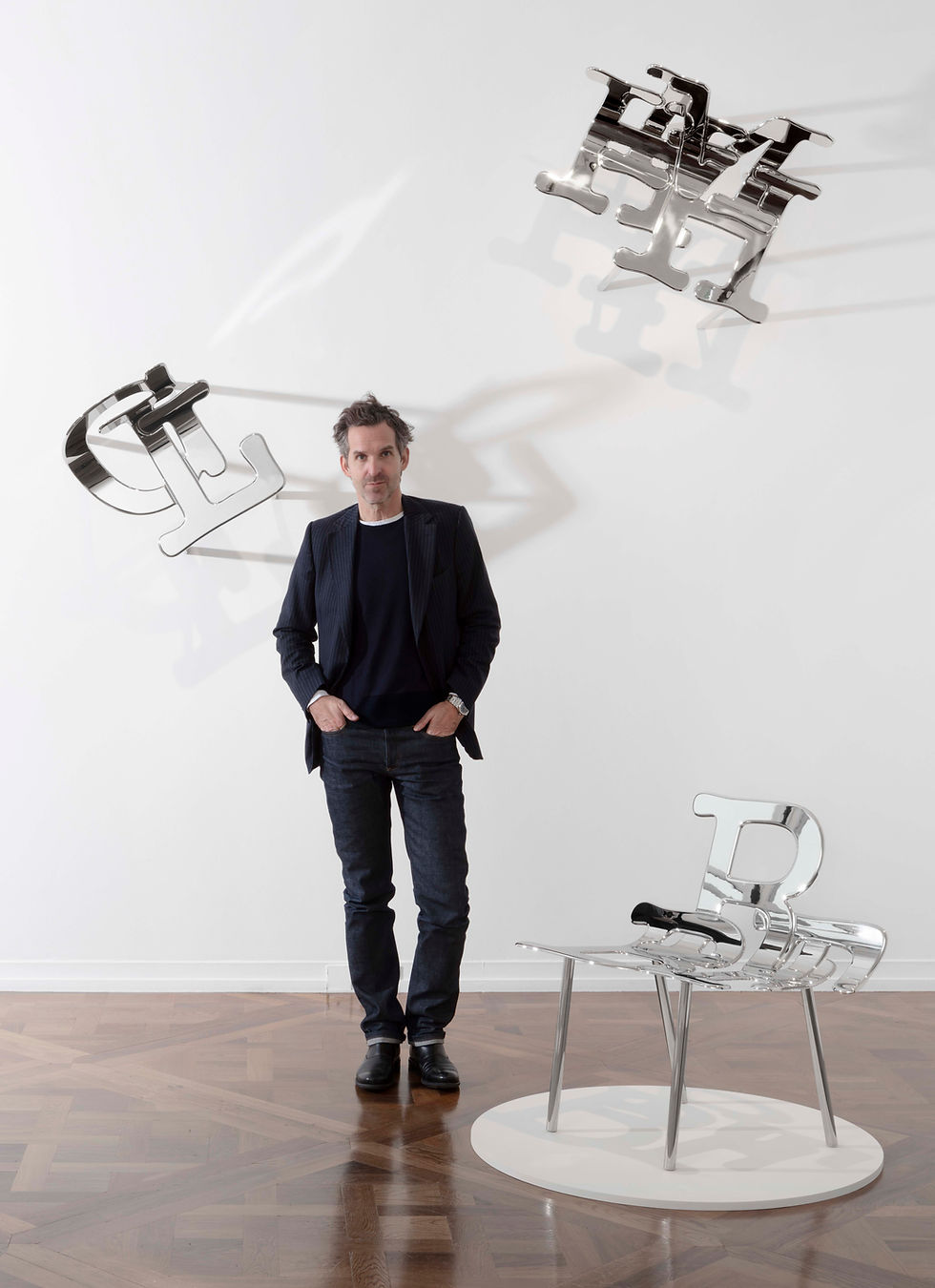
Mathieu Lehanneur
Designer and Artist
Mathieu Lehanneur is a French designer known for blending technology, art, and design to create objects and environments that feel both experimental and poetic. His multidisciplinary practice spans products, artworks, and architecture, moving fluidly between handcrafted pieces and advanced technological works. Inspired by nature, science, history, and innovation, Lehanneur explores new creative territories through constant experimentation. He collaborates with leading artisans and technology ventures, and produces his work globally through his eponymous studio, with bases in Paris and New York. His work is held in major public and private collections worldwide, and he is a recipient of the City of Paris Grand Prize for Creation.
MINDED Podcast
The Leading Platform in Art, Design, Culture and Innovation.
MINDED is a global platform at the intersection of art, design, culture, and tech-driven innovation. Hosted by Yuri Xavier, MINDED explores how today’s leading architects, artists, designers, cultural icons, and entrepreneurs are shaping the future. With 300K+ YouTube subscribers and distribution across all major podcast platforms, MINDED is recognized as a top source for cultural insight and creative leadership. We create original content, video series, and live conversations in collaboration with forward-thinking partners whose ethos aligns with ours. MINDED is more than a podcast — it’s a cultural intelligence platform helping the world’s most visionary creators amplify their voice and influence.
Art | Design | Architecture | Culture | Innovation | AI | Thought Leadership | Podcast | Media Platform | Future of Creativity | Cultural Strategy
Stay in the Conversation
Subscribe to the MINDED Podcast Newsletter
Unlock exclusive insights, early-access episodes, and the ideas shaping the future of art, design & culture—delivered straight to your inbox every week.
WHY MINDED?
What makes Minded Podcast the world’s top art & design podcast?
Minded Podcast combines exclusive, in-depth interviews with leading artists and designers, rigorous explorations of art history and design thinking, and forward-looking cultural analysis - earning its reputation as the go-to, most influential art & design podcast.
How can I listen to Minded Podcast - Apple Podcasts, Spotify, YouTube—or directly via RSS for instant access to every episode?
Stream on Apple Podcast, Spotify and YouTube or visit mindedpodcast.com episodes to subscribe and never miss an episode.
How can designers instantly apply Minded Podcast insights to their own projects in 3 proven steps?
Each episode breaks down real-world case studies - covering empathy mapping, ideation techniques, and prototyping tips- so designers can immediately implement expert-vetted creative workflows into their own work.
Q: Why should brands and companies partner with Minded Podcast?
Partnering with Minded Podcast puts your brand front and center with a highly engaged creative audience—300 K+ YouTube subscribers, 1.5 M+ views, and thousands of monthly listeners. Our flexible collaboration formats (sponsored deep-dives, co-produced series, live panels, webinars) integrate your thought leadership directly into in-depth conversations on art, design, culture, and innovation, amplified across our newsletter, Instagram, LinkedIn, and Twitter. Grow your brand within the world’s leading platform for creative discourse.
